
Why Your HVAC Scent Machine Wastes Oil and How Kevinleo Air Switch Saves Up to 50%
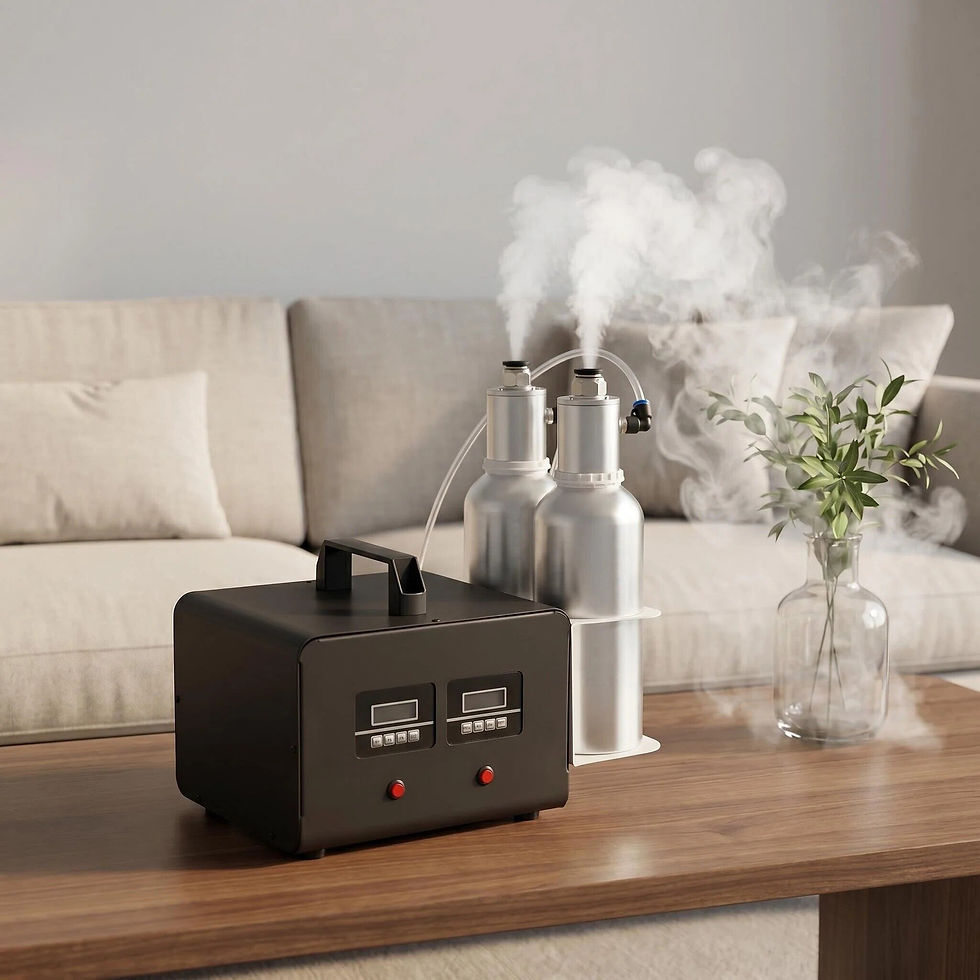
A good HVAC scent machine should run when air is moving. Many run even when the fan is off.
That is where the waste begins. The diffuser keeps atomizing fragrance oil into a still duct. The scent does not travel through the space, oil collects where it should not, and the next fan cycle may push out a heavy burst instead of a smooth background scent.
The fix is simple: make the scent machine respond to real airflow, not just a timer.
Kevinleo’s air switch is built for that job. It detects airflow inside the HVAC duct and lets the scent diffuser work only when the system is actually blowing air. For many HVAC scent setups, that can help save oil up to 50%, depending on fan schedules, diffuser settings, and daily run time.

Your scent machine wastes oil when it runs without airflow
Most HVAC scent machines use cold-air diffusion or atomization. They turn fragrance oil into a fine mist, then rely on the HVAC fan to carry that scent through the ductwork.
When the fan is on, that makes sense.
When the fan is off, the diffuser may still spray into a duct with little or no movement. That creates several common problems:
Oil gets used without scent coverage
The fragrance is released, but it does not travel far.
Scent becomes uneven
Rooms may smell weak most of the time, then too strong when the fan starts again.
Residue can build up near the injection point
Mist has nowhere to go, so it may settle inside the duct or around the nozzle.
The bottle empties faster than expected
The machine follows its program, even if the HVAC system is idle.
This is especially common in buildings where the HVAC fan cycles on and off during the day. A diffuser timer does not always match the fan schedule. Even a well-set machine can waste oil if it keeps working during off cycles.
The main issue is not the scent machine itself. The issue is that it does not know whether airflow is present.
A timer cannot replace airflow detection
Many scent diffusers use working and pause intervals. For example, the machine may spray for a short period, rest, then repeat. That helps control fragrance intensity, but it does not confirm that air is moving.
A timer answers one question: “Is it time to spray?”
An airflow switch answers a better question: “Is the HVAC system moving air right now?”
That difference matters. HVAC systems do not always run exactly when expected. Thermostats cycle. Fans pause. Maintenance settings change. Seasonal heating and cooling patterns also affect runtime across Canada, especially in spaces where ventilation demand changes between winter and summer.
Without airflow detection, the diffuser can keep consuming oil even when scent distribution is poor.

Kevinleo air switch stops the waste at the source
The Kevinleo air switch is designed to connect a scent machine’s operation to HVAC airflow. Instead of guessing when the fan is on, it uses a probe to sense air movement inside the duct.
When airflow is detected, the scent diffuser can run.
When airflow stops, the diffuser stops.
That makes it a practical smart oil saver for hvac diffuser systems because it cuts out the most wasteful operating time: spraying into dead air.
The product is also useful where airflow is gentle. A low-velocity hvac airflow sensor switch matters because some ducts do not produce strong air speed at the diffuser location. If the switch needs too much wind to trigger, the scent machine may fail to run when it should. Kevinleo’s air switch is made for low airflow detection, with the product listing noting a minimum wind speed of 0.3 m/s.
For many installers and scenting operators, this is the missing part in an HVAC diffuser setup. The machine, oil, tubing, and nozzle may all be working, but the system still needs a reliable way to answer one basic question: is there airflow right now?
The oil savings can be immediate
The “up to 50%” saving is easy to understand when you look at how HVAC fans run.
If a diffuser is powered and scheduled for 10 hours, but the HVAC fan only moves air for about half that time, the diffuser may be wasting a large share of its oil. With an airflow switch, the diffuser only works during the fan’s active periods.
Actual savings depend on:
How often the HVAC fan runs
How strong the original scent machine settings are
Whether the diffuser currently runs during fan-off periods
The size of the space and duct layout
The fragrance oil concentration and desired scent level
The biggest gains usually happen in systems where the diffuser is set to run long hours, but the HVAC fan cycles on and off. In those cases, stopping fan-off diffusion can reduce oil consumption quickly.
It can also improve scent quality. Instead of wasting fragrance in the duct, the system releases oil when air can actually carry it through the space.

This small part solves a common installation mistake
A scent machine connected through HVAC can look complete even when it lacks airflow control. The diffuser is mounted. The tube is connected. The nozzle is inserted into the duct. The timer is programmed.
But if the machine does not stop when the fan stops, the setup is incomplete.
A Kevinleo air switch helps correct that mistake without replacing the full diffuser system. It can serve as an electronic airflow switch with probe for an existing HVAC scent installation, provided the wiring and equipment are compatible.
It is also the part to look for when researching a high-sensitivity hvac scent diffuser switch or searching for how to stop scent machine when hvac turns off. The goal is not complicated. The diffuser should follow airflow.
For installation, the basic idea is straightforward:
Place the probe where it can sense real duct airflow.
Connect the switch according to the scent machine and power requirements.
Test the HVAC fan on and off.
Confirm that the diffuser runs only when air is moving.
Adjust scent machine timing after airflow control is working.
For safety, electrical work and duct modifications should be handled by a qualified installer if there is any uncertainty. HVAC systems vary, and a clean installation protects both the diffuser and the air system.
Better control means better scent, not just lower oil use
Saving oil is the headline benefit, but airflow control also helps the space smell more consistent.
When a scent machine runs without airflow, fragrance can feel unpredictable. One area may smell too strong near the supply path, while other areas barely notice it. When the diffuser runs with moving air, the scent has a better chance of spreading the way the system was designed to work.
That can help in many HVAC scenting applications, including:
Retail spaces
Hotels and short-term rental properties
Fitness studios
Clinics and wellness spaces
Residential whole-home scenting
Showrooms and lobbies
The fastest fix is to make the diffuser listen to the HVAC fan
If your HVAC scent machine uses too much oil, the first thing to check is whether it runs while the fan is off. If it does, changing the fragrance oil or lowering the timer may help, but it does not solve the core problem.
The cleaner fix is airflow-based control.
Kevinleo’s air switch helps your diffuser run only when the HVAC system is moving air, which can reduce wasted oil, improve scent consistency, and extend the time between refills.
For product details and compatibility, view the Kevinleo air switch for scent machines via HVAC system.
A scent machine should not spray into still air. Add airflow detection, and the whole system starts working the way it should.


Comments