
Why Luxury Real Estate Agents Use Hotel Scent Machines for Open Houses
A luxury open house can be undone in the first three seconds.
Before a buyer notices the marble, the millwork, or the lake view, they notice the air. If the home smells stale, too perfumed, recently cooked in, or simply unfamiliar, the first impression starts working against the showing. If the scent feels clean, finished, and expensive, the home has a better chance to feel complete.
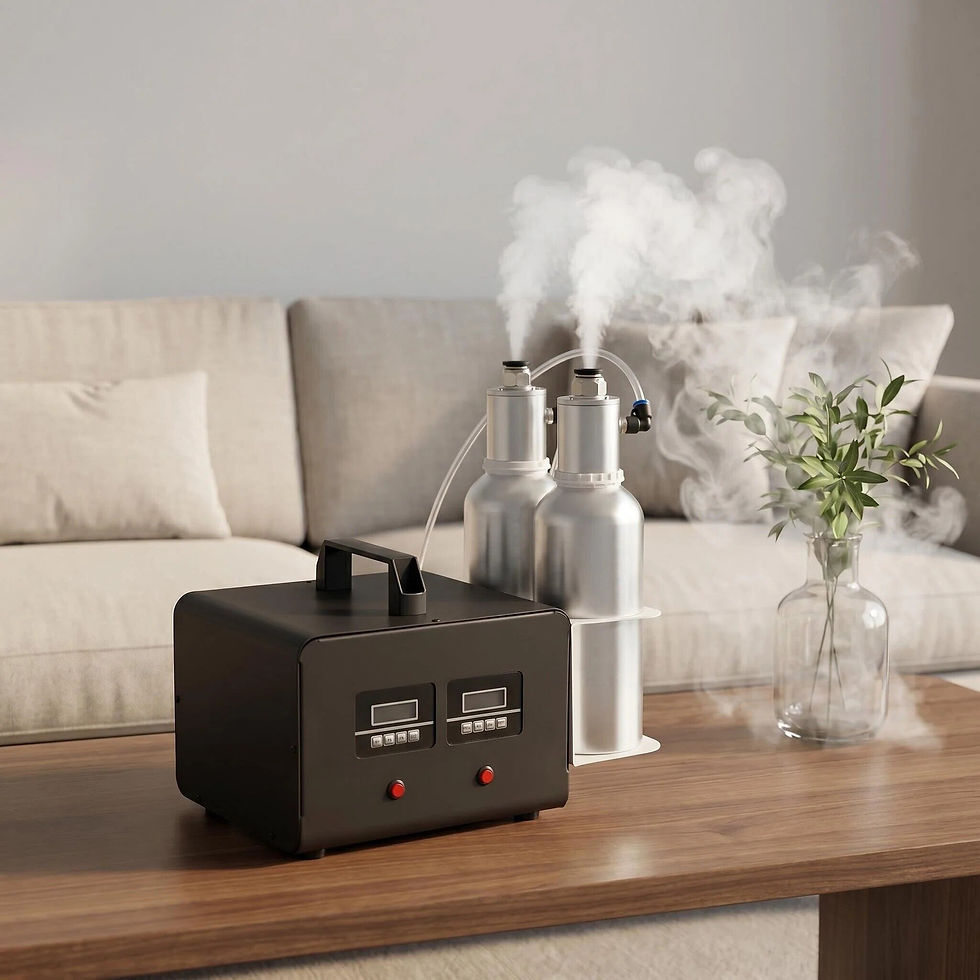
That is why many high-end agents borrow a trick from five-star hospitality. They use hotel scent machines to create a subtle, consistent atmosphere during open houses, private showings, and staged listing launches.
The goal is not to make a house smell like a candle shop. The best scenting is quiet. It supports the property, suits the season, and disappears into the background. Buyers may not name it, but they often feel it.
Scent shapes the first impression before the tour begins
Luxury sales are emotional, even when buyers talk in practical terms.
They may ask about square footage, school catchments, property taxes, mechanical systems, and recent upgrades. Those details matter. Yet the feeling of the home often forms first. Scent is part of that feeling because it reaches buyers before they have time to analyse the space.
A high-end home should feel:
Fresh, but not sterile
Lived-in, but not personal
Warm, but not heavy
Memorable, but not obvious
That balance is hard to achieve with candles, plug-ins, room sprays, or stovetop tricks. Candles can feel staged. Sprays fade quickly and often smell sharp at first. Plug-ins can become too strong in one corner and absent in another. Baking cookies may feel charming in a family home, but it rarely fits a sleek penthouse or a modern waterfront property.
Hotel scent machines solve a different problem. They create an even, controlled scent experience across the space. The scent feels like part of the home rather than something added at the last minute.
A buyer walking through a grand entrance, gallery hallway, or open-concept living area should not think, “Someone sprayed fragrance here.” They should think, “This home feels beautiful.”
That is the difference.
Hotel scent machines offer control that candles and sprays cannot
The scent systems used in hotels are designed for consistency. They often use cold-air diffusion, which breaks fragrance oil into a fine dry mist. The particles travel through the air more evenly than a typical spray and do not rely on heat, flame, or water.
For real estate agents, that control matters.
Open houses are unpredictable. Doors open and close. People move through rooms. HVAC systems cycle on and off. A large home may have several scent zones, while a condo may need only the lightest touch near the entry.
A proper scent machine allows the agent or staging team to adjust:
Intensity level
Run time
Diffusion schedule
Placement
Scent choice by property type
That level of control keeps the experience polished. A small powder room does not need the same output as a large foyer. A basement theatre needs different treatment than a double-height living room. A new-build home may need help softening construction-related odours, while an older character home may need a clean backdrop without erasing its charm.
There is also a safety and practicality advantage. No open flame. No melted wax. No one running around between showings to relight candles or mist rooms again. For staffed open houses, broker tours, and private evening showings, that matters.
A luxury property presentation should feel effortless. The best scent system helps it feel that way.

The right scent makes a property feel more expensive
Scent can lift or flatten the perceived quality of a space.
A beautiful home with the wrong fragrance can feel confused. Heavy vanilla in a minimalist glass house feels out of place. Sharp citrus in a warm heritage property can feel too bright. Strong florals in a condo elevator lobby can feel dated. Luxury scenting works because it is tailored to the style of the home.
A good scent choice should match the architecture, materials, light, and likely buyer mood.
For example, a modern penthouse might suit notes that feel crisp and architectural:
Bergamot
White tea
Soft musk
Cedar
Clean amber
A country estate or mountain retreat may feel better with deeper, natural notes:
Sandalwood
Fig leaf
Vetiver
Cardamom
Smoked woods used very lightly
A coastal or lakefront property can feel more open with airy notes:
Sea salt
Green tea
Neroli
Driftwood
Sheer linen
The best luxury scents have structure. They are not sugary, loud, or instantly identifiable as a commodity fragrance. They feel composed. Like a good hotel lobby, the scent should create a sense of arrival.
This is why luxury real estate agents think beyond “nice smell.” They think about scent fit.
A fragrance should support the story the home is already telling. A limestone foyer, walnut kitchen, spa-like ensuite, and soft evening light all point in a direction. The scent should follow that direction, not compete with it.
The strongest open house scent is often the one buyers remember as atmosphere, not aroma.
This is the same reason high-end hotels invest in signature scenting. Guests may not ask what the fragrance is, but they remember the feeling of walking into the lobby. Real estate agents use that same sensory cue to make a listed property feel calm, cared for, and complete.
Scent helps neutralize distractions without masking problems
Every home has an air profile.
Some smell like cleaning products. Some carry traces of pets, cooking, damp storage, new paint, or recently installed flooring. Some are simply closed up between showings. In Canada, this can become more noticeable in winter, when windows stay shut and heated indoor air feels dry.
A hotel-grade scent machine is not a substitute for cleaning, ventilation, or repairs. Agents who treat scent as a cover-up usually make the home feel worse. Buyers can detect when fragrance is being used to hide something.
The proper process is simple:
Remove the source of the odour where possible.
Clean textiles, drains, bins, vents, and soft surfaces.
Ventilate before the showing.
Use scent lightly to create a finished impression.
That order matters.
Scent should never fight a problem. It should sit on top of a clean environment. If a home has a musty basement, damp carpet, or pet odour in upholstery, fragrance will not fix it. At best, it creates a confusing mix. At worst, it makes buyers suspicious.
Used correctly, scent supports freshness. It gives the home a consistent air signature after proper preparation. It can soften the smell of vacant rooms, make large spaces feel more welcoming, and reduce the sterile edge that sometimes follows deep cleaning.
This is especially useful in staged homes. New furniture, rugs, florals, fresh paint, and cleaning products can all release different smells. A balanced scent helps tie the air together.

Placement and restraint make the difference
The most common scenting mistake is using too much.
Luxury scent should never announce itself from the driveway. It should never cling to clothing. It should never fill a room so heavily that someone opens a window. A buyer should be able to breathe naturally and focus on the home.
That is why placement matters as much as the fragrance itself.
The entry sets the tone
The entry is the most important scent zone. This is where the emotional frame begins. A light scent near the foyer gives buyers a clean first impression without overwhelming the full tour.
For condos, the entry and main living area may be enough. For larger homes, agents may add a second unit near the main entertaining area or primary suite, depending on layout.
Airflow changes everything
Scent follows air. Forced-air heating, air conditioning, open windows, ceiling heights, and staircases all affect distribution.
A machine placed near a return vent may move scent farther than expected. A diffuser hidden in a corner may scent only that corner. A large open-plan room with high ceilings may need a different setting than a compact hallway.
Before an open house, the scent should be tested when the home is set up exactly as it will be shown. Doors open. HVAC running. Lights on. Music, if used, at its showing level. The full sensory environment should work together.
Less is more in bedrooms and small rooms
Bedrooms should be calmer than entries and main rooms. Powder rooms should be handled with care. Small spaces intensify fragrance quickly.
For luxury real estate, the best rule is simple: if the scent is obvious, reduce it.
A soft trace is enough. The home should feel fresh, not fragranced.
Scent creates a memorable open house without feeling staged
Many buyers tour several properties in a short period. After the third or fourth showing, details blur. One kitchen blends into another. Ensuite finishes feel similar. White walls, wide-plank floors, and pot lights start to repeat.
Scent gives the brain another way to file the memory.
This does not mean scent can sell a home on its own. It cannot fix poor pricing, bad photos, weak staging, or a difficult layout. But it can strengthen the emotional memory of a property that already has the right fundamentals.
A buyer might later say:
“That was the calm one.”
“The one that felt like a boutique hotel.”
“The house that felt really fresh.”
“The condo that felt finished.”
Those phrases matter. They show that the buyer attached a feeling to the property.
Luxury real estate is full of fine margins. Two homes may have similar finishes and locations. A polished sensory experience can help one feel more desirable, especially when buyers are comparing lifestyle as much as specs.
This is why real estate agents who work at the high end pay attention to details that others ignore. They know buyers are not only evaluating rooms. They are imagining a life inside them.

Choosing a scent for a luxury open house
A strong scent strategy starts with the property, not the agent’s personal preference.
The question is not, “What fragrance do I like?” The better question is, “What should this home feel like when someone walks in?”
Here are a few guiding principles.
Choose clean over sweet
Sweet scents can feel personal and polarizing. They may remind one buyer of dessert and another of a discount store candle. Clean, airy, woody, and lightly green profiles tend to feel more refined.
Avoid loud seasonal themes
Pumpkin spice in October or pine in December may feel fun, but it can date the showing. It also pulls attention away from the property. Seasonal scenting works best when it is subtle, such as soft woods in winter or light citrus-green notes in spring.
Match the price point
A multimillion-dollar listing should not smell like a basic room spray. Buyers may not know why a cheap fragrance feels wrong, but they often sense the mismatch. Higher-quality scent oils usually have more depth and smoother dry-down.
Test before the listing goes live
Scent behaves differently in every home. Materials absorb and reflect fragrance in different ways. Rugs, drapery, wood, stone, and upholstery all affect the result. Test the scent at least once before photography, video, or the first showing.
Keep accessibility in mind
Some visitors are sensitive to fragrance. A light hand is both tasteful and practical. The aim is a barely-there atmosphere, not a dense scent cloud. Agents should also be ready to turn a unit down or off if a private showing requires a fragrance-free environment.
Why agents keep using them
Luxury agents use hotel scent machines because they solve a real presentation problem. They make scent consistent, controlled, and aligned with the property’s story.
They also protect the tone of the showing. Instead of relying on last-minute tricks, the agent can set the home the way a hotel sets a lobby: clean air, soft atmosphere, quiet confidence.
The real value is not the machine itself. It is the emotional polish it adds when everything else is already done well.
A luxury listing still needs the essentials:
Correct pricing
Strong photography
Careful staging
Clean windows and surfaces
Good lighting
Clear access
Skilled follow-up
Scent belongs with those details. It is part of the preparation that makes the home feel ready.
When used with restraint, a hotel-style diffuser can help an open house feel more considered. Buyers enter a space that feels calm, fresh, and elevated. They stay longer. They remember more. They leave with a clearer emotional impression.
That is why the best luxury real estate scenting does not try to impress buyers with fragrance. It helps the property make its own best first impression.


Comments