
Jet Lag Remedies for Tired Travelers How Hotel Scenting Restores Energy
A long flight can leave the body in one place and the mind somewhere over the Atlantic. Sleep feels mistimed. Meals feel strange. Even a beautiful hotel room can feel foggy when jet lag and travel fatigue hit at once.
Hotel scenting cannot reset a body clock on its own. Light exposure, hydration, rest, movement, and meal timing still matter most. Yet scent can shape how a space feels within seconds. Used well, it helps a tired traveller feel grounded, calm, alert, or ready for sleep.
This article is informational only and does not replace medical advice. For frequent severe jet lag, sleep issues, or health concerns, speak with a qualified health professional.

Scent helps the brain read a new place faster
After travel, the senses do extra work. The eyes scan for signs. The ears adjust to new noise. The body checks whether the room feels safe enough to relax. Scent joins that process quickly because smell connects closely with memory and emotion.
That is why a hotel lobby scent matters. A clean, balanced aroma can tell the nervous system, “You have arrived.” In a few moments, the space feels less unfamiliar.
For jet-lagged guests, this can reduce the jarring shift from airport stress to hotel stillness. The best hotel scents do not shout. They sit in the background and support the mood of the space.
Good arrival scents often feel:
Fresh, without smelling like disinfectant
Soft, without feeling sleepy
Clean, without being sharp
Consistent, from entrance to lift area to corridor
Common notes include light citrus, green tea, soft woods, mint, fig leaf, ginger, or gentle florals. The goal is not perfume. The goal is orientation.
Energy comes from the right scent at the right time
Jet lag remedies for tired travelers usually focus on routines. Get daylight in the morning. Keep naps short. Drink water. Avoid heavy meals too close to bed. Hotel scenting can support those routines by giving each space a clear emotional cue.
A lobby should feel refreshed and open. A guest room should feel settled. A spa should feel quiet. A breakfast area should feel bright enough to start the day.
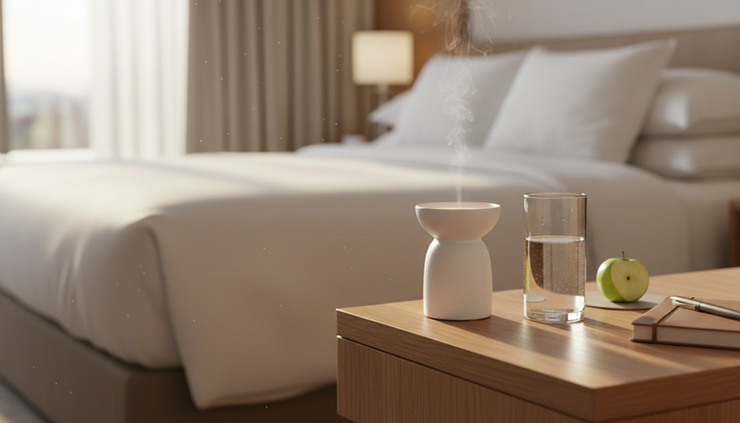
Morning scents should feel bright but not harsh
For travellers waking up heavy and slow, sharp scents can feel like too much. A better morning scent has lift without bite.
Useful morning notes may include:
Grapefruit or bergamot
Spearmint or peppermint in low amounts
Lemongrass
Rosemary
Light herbal tea notes
These scents can make breakfast rooms, lounges, and fitness areas feel more awake. They do not create energy like sleep does, but they can help the environment feel less flat.
Evening scents should help the body slow down
At night, the scent profile should shift. Bright citrus in a corridor at 11 p.m. can work against rest. A softer scent helps the room feel quieter.
Evening notes often include:
Lavender used lightly
Cedarwood
Sandalwood
Chamomile
Soft musk
Vanilla in very small amounts
The most effective sleep-friendly scent is subtle. If a guest notices it too strongly while lying in bed, it is probably too much.
Hotel scenting works best when it follows the guest journey
A strong scent at the front desk and nothing elsewhere creates a strange gap. A heavy fragrance in a lift can feel trapped. A spa scent in a restaurant can interfere with food. Hotel scenting works when each area has a clear job.
A simple guest journey could look like this:
Hotel area | Better scent direction | Why it helps tired travellers |
Entrance and lobby | Clean citrus, green tea, soft woods | Signals arrival and freshness |
Corridors | Very light neutral scent | Keeps movement calm and comfortable |
Guest rooms | Soft woods, linen, mild herbal notes | Helps the room feel restful |
Breakfast area | Light citrus, mint, gentle herbs | Supports a brighter start |
Spa or wellness area | Lavender, cedar, chamomile | Encourages slower breathing and rest |
Hotels should also think about scent strength. A tired traveller may be more sensitive after a long flight, especially after dry cabin air, poor sleep, or a headache. Low and steady beats strong and memorable.

Travellers can use scent as part of a jet lag plan
Guests do not need a full scent system to benefit from scent cues. A few small habits can make hotel rooms feel more supportive after arrival.
Try this after a long trip:
Open the curtains soon after waking to get natural light.
Take a short walk outside, even for 10 minutes.
Keep a familiar travel scent, such as a small roller or sachet, for bedtime.
Use hotel-provided pillow mist only if it feels gentle.
Avoid strong fragrance before sleep if it feels stimulating.
Drink water before using coffee as the main fix.
A familiar scent can also act as a sleep cue. If the same soft lavender, cedar, or chamomile note is used at home and while travelling, the brain may link it with rest. This is not magic. It is habit, memory, and repetition.
For people sensitive to fragrance, the best remedy is choice. Hotels should offer unscented options when possible, especially for pillows, linens, and in-room amenities.
Hotels need balance, not stronger fragrance
A scent strategy should never cover up poor cleaning, stale air, or dampness. Guests can tell the difference. Cleanliness comes first. Scent should add polish after the basics are right.
A thoughtful hotel scenting plan, whether managed in-house or with a specialist such as Kevinleo Scent, should consider ventilation, guest sensitivity, season, brand atmosphere, and the purpose of each space.
In Canada, this also means planning for seasonal shifts. A crisp scent that feels perfect in July may feel thin in February. A warm wood scent that feels cosy in winter may feel heavy during a humid summer. The best hotels adjust gently, not dramatically.

The real remedy is a more supportive stay
Jet lag feels physical, but the environment changes how hard it is to recover. A room that smells calm, a lobby that feels fresh, and a breakfast area that feels bright can all help tired travellers move through the day with less friction.
Hotel scenting is not a cure for fatigue. It is a quiet support tool. Paired with sleep, daylight, hydration, and gentle movement, it can make travel recovery feel smoother.
The best scent is the one guests barely notice, yet remember as part of a stay that helped them feel human again.
Comments